
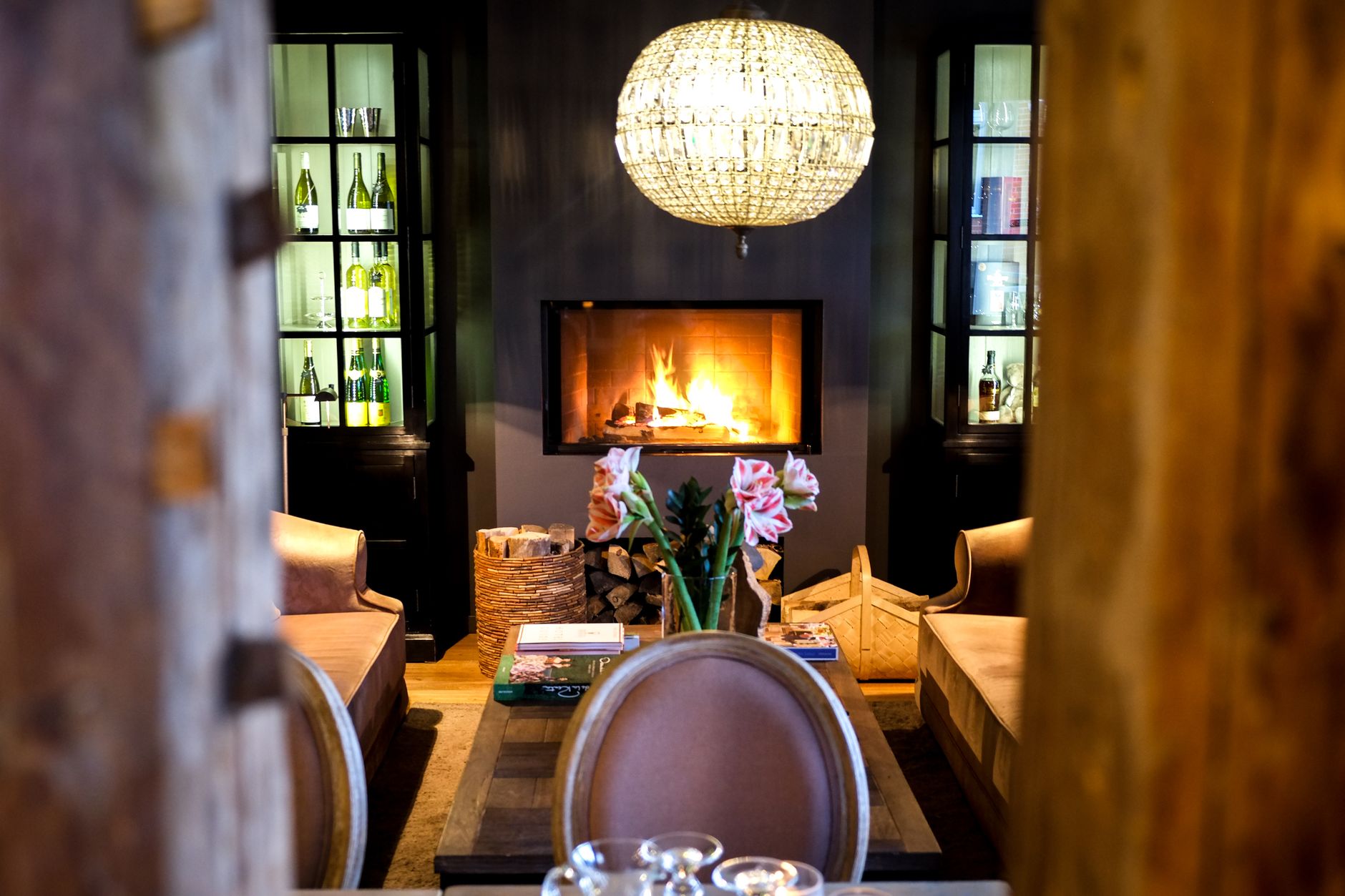
Every part of an older chimney, looked at before closing
Book the sale inspection
Give us the address, the year the house went up if you know it, and how we get in. We confirm a visit time and the inspection price.
The parts of a chimney built before 1980
Walk through an older chimney from the bottom up and you meet the same pieces in almost every house of that age. Each one wears in its own way, and each one is a line on our report.
None of these parts is a problem just because it is old. Plenty of clay flues from the 1950s are still sound. The point of the inspection is to say which ones are, on this house, in writing.
- Firebox and hearth: firebrick, the mortar between it, and the slab in front that protects the floor.
- Throat damper: a cast iron plate just above the fire, often rusted open or rusted shut by now.
- Smoke chamber: the sloped brick funnel above the damper, rough and unsealed on many houses of this era.
- Clay tile flue: square or round tiles stacked up the inside, joined by mortar that may have washed out.
- Brick above the roof and the slab on top: the parts that take the sun and the winter storms.
What the camera finds inside a clay flue
From the firebox a flashlight shows the damper and a few feet of tile. The camera goes the rest of the way. On older flues we look for open joints between tiles, tiles cracked across, sections that have shifted out of line, and places where the clay has flaked away. Each one is a gap that lets heat and smoke reach the brick and the framing around it.
We record the footage and pull stills at each finding, marked with how far down the flue it sits. That way a buyer, a seller or a contractor bidding the repair can see the same spot and talk about the same thing.
Inserts, log sets and gas valves added later
Older houses often have a newer heater sitting in an old opening. A gas or pellet insert should have its own liner running from the unit to the top of the chimney, and the area around the old damper should be sealed. We check both, read the nameplate so the model and fuel are on record, and note the clearances to the mantel.
Gas log sets get a look at the damper clamp, which has to hold the damper open, and at the burner and valve. If an insert or log set was added without a liner or with the damper left free to close, the report says so plainly, because that is the kind of finding a sale should not discover after closing.
How the report fits the sale
Each finding lands in one of three groups: fine to use, use after a repair, or keep out of use until fixed. Next to each repair we put our price where the site has one, and for anything else we describe the scope so a written quote can follow. That gives both sides something concrete to work from, whether the answer is a repair before closing, a credit, or nothing at all.
We do not advise on the deal itself. Our job is to say what the chimney needs. Buyers and sellers in Bell Gardens, South Gate, Santa Fe Springs and the nearby parts of Los Angeles use the same report format, so a finding reads the same way on every house.
What a sale inspection costs
Most sales call for the camera inspection. The lighter visual check is listed for comparison.
- Camera inspection for a house in escrow
- $380
- Visual check of the open parts only
- $53
Repairs found on the inspection are priced separately. Where this site lists a price for a repair, the report shows it; anything else is written up as a quote.
Older houses and sale inspections
The house is from the 1950s. Does that change what you look at?
It changes what we expect to find. Houses of that age usually have a clay tile flue, a cast iron throat damper and an unsealed smoke chamber. We look at each of those closely, along with any insert or gas line added since.
There is an insert in the fireplace. Can you still film the flue?
Usually, yes. We run the camera from the top where the cap comes off, and from below where the insert can be opened without breaking a gas connection or a seal. If part of the flue cannot be reached, the report says which part.
The home inspector wrote that the chimney needs a specialist. Is this that visit?
Yes. A general home inspection stops at what can be seen from the room and the roof. The Level 2 adds the camera, the smoke chamber, the attic where it can be reached and the details of any insert or log set.
Do you price the repairs in the report?
Where this site lists a price, such as a cap, a leak repair or a gas insert, that price appears next to the finding. Other repairs are described clearly enough for a written quote to follow.
Which cities do you inspect for sales?
We are based in Bell Gardens and inspect across South Gate, Santa Fe Springs and the nearby parts of Los Angeles.
Selling or buying an older house?
Use the contact page to give us the address and access details, and we will set up the camera inspection.
Call (323) 524-5369