
Water you cannot see until the trim stains
A leak in an ordinary fireplace usually shows itself: a wet hearth, a drip at the damper, a dark patch on the firebox wall. With an insert in the opening, the signs are quieter. Water runs down the outside of the liner or the inside of the old flue, collects behind the steel box, and finally shows up as rust on the trim, a musty smell when the unit is off, or a stain on the drywall beside the mantel.
By then it has often been going on for a few winters. Bell Gardens does not get much rain, but what it gets tends to arrive in heavy storms between December and March, and one wet week is enough to find every gap at the top of a chimney.
Where the water gets in
We trace every leak before we price it, because the same stain can come from very different places. On a chimney with an insert, these are the usual sources:
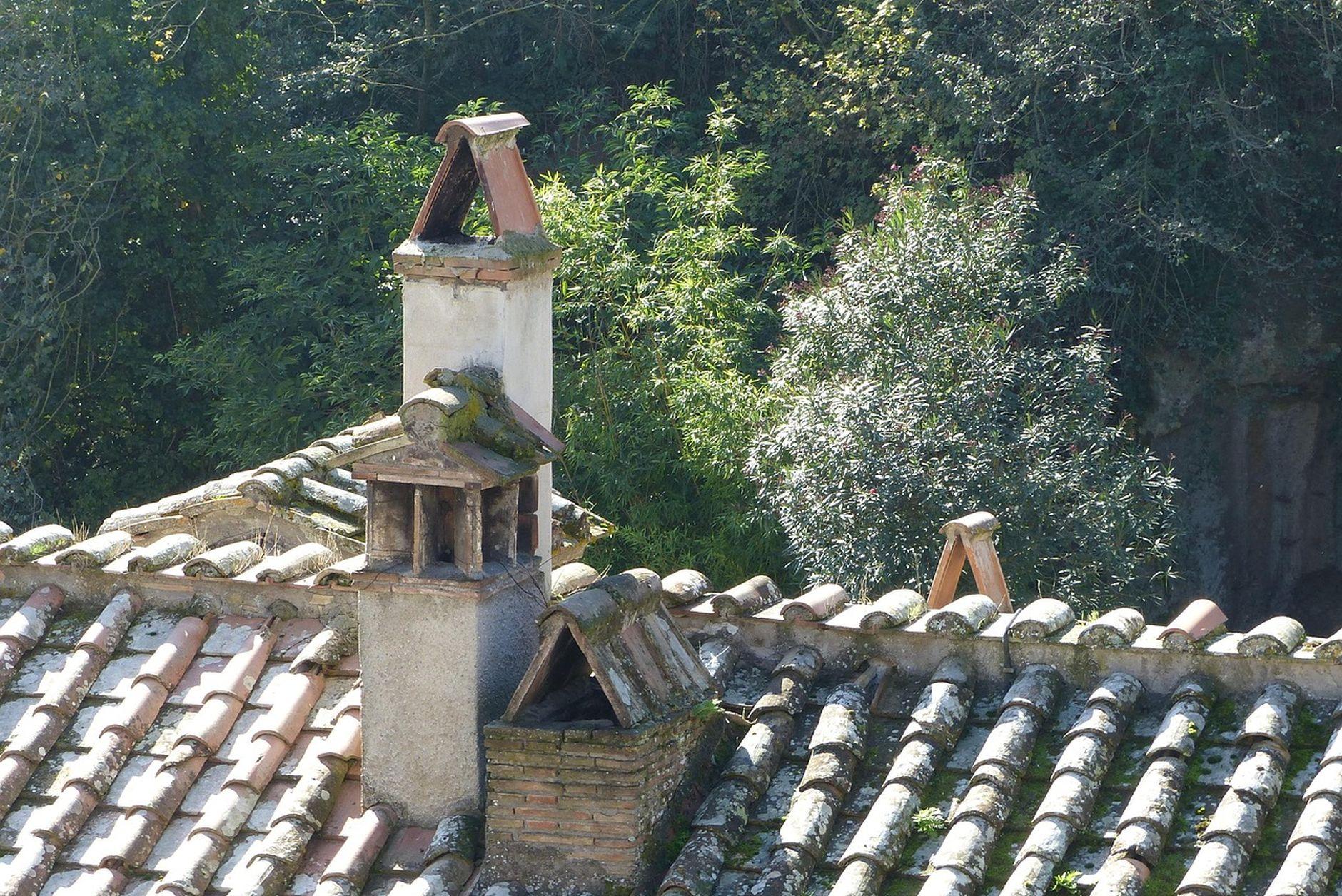
- The top of the chimney. The concrete or mortar slab around the flue opening cracks with age and sun. Rain sits in the cracks and soaks down through the brick.
- The liner cap. An insert liner ends in its own cap. If that cap is the wrong type, sits loose, or was never sealed to the top plate, rain runs straight down the liner to the insert.
- The joint where chimney meets roof. The metal folded into the brick and under the shingles can lift, rust or lose its sealant. Water then runs inside the roof deck and down the chimney chase.
- The uphill side of a wide chimney. On a sloped roof, water piles up behind the stack, and if nothing turns it aside it finds a way in.
- The brick itself. Older brick and soft mortar absorb water like a sponge, then release it inward.
Most leaks are a mix of two of these. A crack at the top and tired metal at the roof line is common.
How we find it
On the visit we start inside, at the insert. We pull the trim where it comes off, look at the top of the unit and the liner connection, and note where the rust or staining sits. Then we go to the attic if there is one, because water often shows on the framing beside the chimney long before it reaches the room.
On the roof we check the top slab, the liner cap and plate, the metal at the roof line and the brick. Where it helps, we run water on one area at a time while someone watches inside. That is slow, but it tells us which part to fix instead of fixing everything.
What a leak repair costs
On this site, leak tracing and repair runs $540 to $3,250. The low end is a contained job, such as resealing the top plate of the liner or patching a small section of metal at the roof line. The high end is a combination: a new top slab, new metal around the base of the chimney, and repointing where water has worn out the mortar.
One related item has its own price here. Where water piles up behind a wide chimney, a cricket to split the flow runs $430 to $975, or $650 to $1,600 when the metal around the chimney is replaced at the same time.
A new chimney cap is quoted after we measure. The flue size, and whether the cap covers one opening or the whole top, set the price.
The top slab and stand-alone metal work are priced in writing from what we see on the roof, since their size and condition vary a lot from one chimney to the next.
Does the insert have to come out?
Usually not. Most leaks are fixed from the roof, and the insert stays in place. We pull it only when water has damaged the unit, the liner connection or the firebox behind it, or when we need to see the smoke chamber to know how far the water has gone.
If the insert has rusted through, or the gas valve and controls have been wet for a long time, we say so. Sometimes a leak is the moment to replace an old unit. A gas insert set into the existing firebox runs $2,700 to $5,400 on this site, and our post on gas insert cost in Bell Gardens explains that range.
Why not just seal the brick?
Clear water repellent has its place, and we offer chimney waterproofing as part of a repair. But a repellent on the brick will not stop water coming in at a cracked top, a loose liner cap or lifted metal at the roof. Sealing first and tracing later usually means paying twice. We fix the entry point, then treat the brick if it still soaks up water.
After the repair
Once the leak is fixed, we check the insert, the liner and the trim, and write up anything the water has left behind: rust on the unit, soft mortar inside, or a stain that will need paint once it dries. If the liner has not been filmed in a long time, we may suggest a Level 2 inspection at $380, especially if water has been sitting on it.
The chimney leak repair page lists what the repair can include, and chimney cap installation covers caps on their own. We trace leaks across Bell Gardens, South Gate and Santa Fe Springs.
If the trim around your insert is rusting or the wall beside it is stained, our contact page is the next stop; describe where it shows and we will come and find the source.
Turn the Reading Into a Real Shortlist
Bosworth Chimney Solutions measures your opening and flue, then sets the inserts, log sets or pellet units that fit next to each other with written prices. Visits run from Bell Gardens to South Gate, Santa Fe Springs and the City of Los Angeles.